A monthly blog about the sensory experience of New York City

Monday, June 4, 2012

SOUND: Wave Hill’s copper beech tree before a rainstorm

There’s something different about the air at Wave Hill, the public garden in the Bronx on the cliffs above the Hudson River. Perhaps it’s because the wind usually comes from the west, straight from the Palisades across the river and hits you right there on the bluffs.
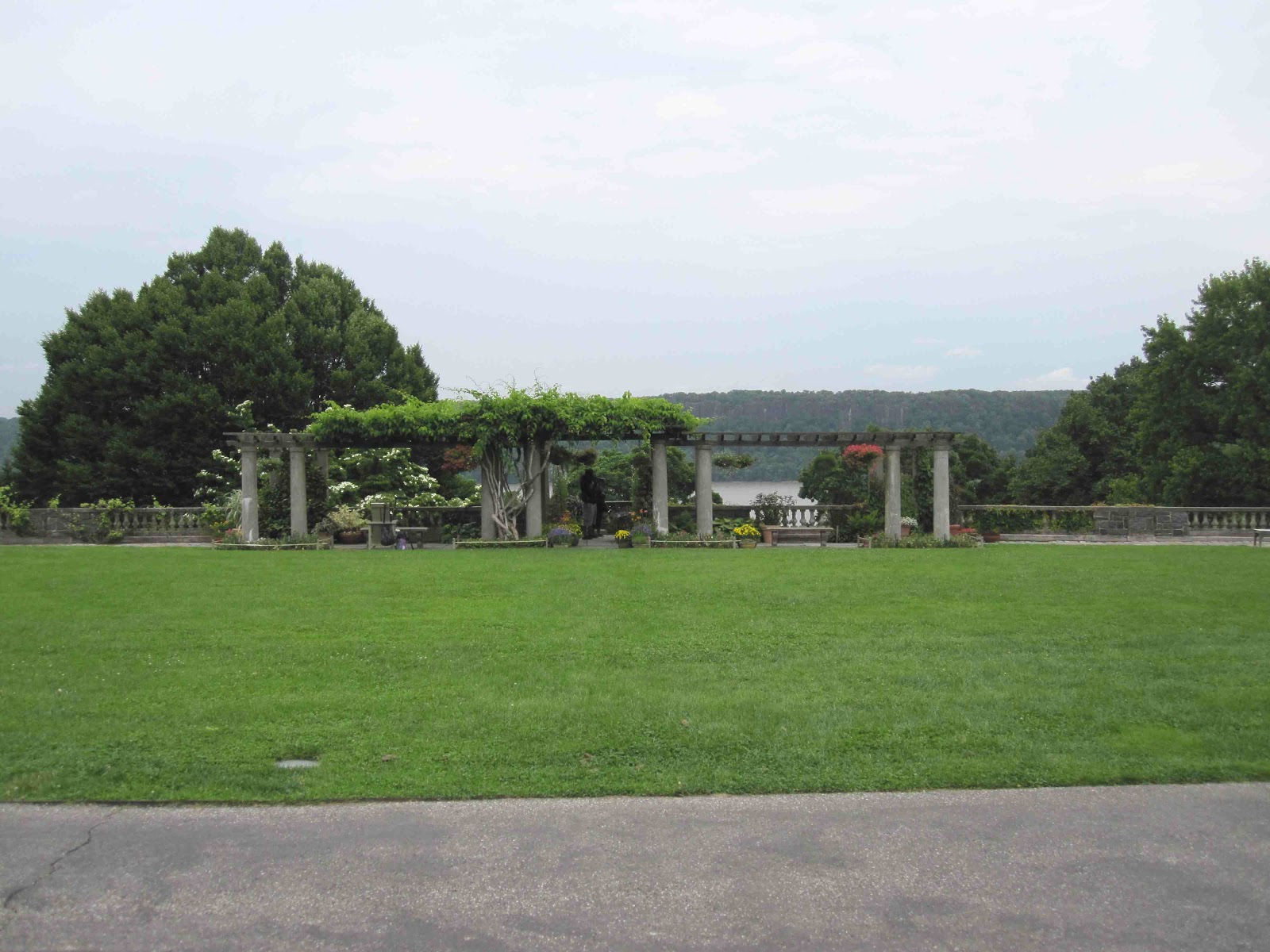
Perhaps it’s because the garden’s juxtaposition of sweeping vistas and intimate nooks creates unpredictable air currents. Or perhaps it’s because the trees here are generally not clustered in groves but stand alone, free to interact with the elements on all sides. When the wind blows, all sides of the tree move with it, and often don’t touch any other trees. Walking through the garden on a windy day is rather like meandering through an orchestra pit in the midst of a symphony: as you pass each tree, its unique tone sounds out for a moment against the sibilance of the trees around it.One such tree is the venerable copper beech located on a quiet patch of lawn between the aquatic garden and the shade border. More than a hundred years old, it has elephantine bark, silvery gray and in places marked by wrinkles so intricate it seems to be melting. The boughs dip to brush the ground.

One afternoon last week, as I wandered the gardens, I felt the breeze stiffen, and the sun shuttled behind clouds. A stray raindrop splattered onto my bare arm. I took shelter beneath this beech tree and was struck by the sound of the leaves rustling in the building wind: a susurration that moved in a wave around the circumference of the tree. The leaves whispered with brief pauses in between movements, almost as one might to soothe an anxious child: shhhhh (now) shhhhhh. And as the breeze died, the sound died in a hiss almost like the tide receding along a sandy shore—only to build again.

I moved to stand closer to the leaves, which were thick, oily, and mahogany colored, gently cupped like hands waiting to receive the coming rain. But up close, the sound was not nearly so remarkable, more of a papery touch, barely audible.

Stepping back from the tree into the garden, I saw the tree’s bodily sway in the breeze was just as soothing, as parental, as its sound: a listing to accommodate the strange, changing air, just enough to keep it flexible, just enough to keep it strong.


Tuesday, May 1, 2012

SOUND & TOUCH: Sitting in the New York Public Library’s Rose Main Reading Room


Every aspect of the Rose Main Reading Room, in the New York Public Library’s main branch, at Forty-second and Fifth, seems designed to encourage long visits and to foster serious accomplishment. Two marble candelabras flank the entrance to the room, which measures the length of two city blocks. 


The forty-two long, wide oak tables ensure you’ll never brush elbows with fellow patrons—or read over their shoulders. In addition to the light from chandeliers and sunlight slanting through cathedral windows, intimate bronze-shaded lamps spill warm puddles of (soon-to-be-forgotten incandescent) light over the writing surface. A trash can awaits at the end of each row, dictionaries on pedestals (with individual reading lamps!) await at the other, and white stripes run along both sides of the center aisle, like the emergency lighting on an airplane, keeping your mind and body from straying. Black numbers designate table spaces in front of each wooden armchair. 


And what chairs these are! As far as wooden chairs go, the Rose Main Reading Room's model seems designed to hold you and keep you, providing a firm launching pad for your loftiest thoughts. 


In these chairs, no amateurish, collegiate study positions are tolerated. Your feet rest so solidly on the floor, they will never seek out under-table ledges or chair rungs; they will not curl up beneath you. The arms, a graceful slope of polished wood, support the arms all the way to the table edge, where they meet it at perfect ergonomic height for typing or writing. The seat features a slight depression for each thigh. The curved chair-back hits just below the shoulder blades, and the carved central slat ensures your spine is straight. The legs are not on casters, and it takes a forceful nudge to wrest them from their spot, making it even easier to just stay put. 


In fact, the grating of the chair legs scraping the floor tiles is perhaps the most prominent sound in the room. The silence of the Rose Reading Room is the most dignified—sacred, even—of any public space I’ve encountered in the city. There is no laughter, chatter, or exclamations, only muffled coughs, the clicks of pens and the plastic buckles on backpacks. 


The distant rattles and bangs of the medieval book-delivery machine in the center of the room, which conveys books from the library’s forty-mile inner sanctum of shelves, seem to echo the churnings of the many minds bent over the tables. And if your mind should chance to wander, all you have to do is stay right there in your seat and look up to the ceiling, where, fifty-two feet above, ceiling panels painted with luminous sky and billowing clouds greet you, offering escape and, perhaps, inspiration. 


As Alfred Kazin described the room more than a hundred years ago, “There was something about the vibrating empty rooms early in the morning—light falling through the great tall windows, the sun burning the smooth tops of the golden tables as if they had been freshly painted—that made me restless with the need to grab up every book, press into every single mind right there on the open shelves.”

Monday, April 2, 2012

SOUND: Faerman Cash Register Company

Whenever the door of 159 Bowery opens, a digital doorbell chimes. And occasionally the ring of Brian Faerman’s cell phone echoes down the rows of cash registers that line the countertops, shelves, and floors of his family’s third-generation shop.


But, of course, this modern music isn’t the reason passersby peer in the window, hesitate, and step inside. It isn’t the reason that Brian Faerman, the store’s middle-aged proprietor, has to prowl the aisles, answering same questions—“What’s your favorite cash register?” “Which is the oldest one here?” “Are these for sale?”—with a combination of good cheer and weary exasperation, while preventing his visitors from spilling their lattes on the old machinery. It isn’t the reason customers swoon over old machines with ornate brass and iron casings, feathered arrows or sinister fingers pointing at numbers frozen in time. And it isn’t the reason that customers bring their cash registers here—or ship them from as far away as Egypt--for the Faermans to repair, often graffitied with stickers and the Sharpied-numbers of coworkers and credit-card companies (which threaten these machines’ very existence).


The reason, of course, is that there’s something enchanting about the old-fashioned cash register, and particularly its iconic sound: the ka-ching, which is no match for the digital bleeps that increasingly punctuate our days. Indeed, each ka-ching is a sound of small victory: a transaction completed. With its prelude of whirs and clatters, the ka-ching feels like a victory for the register, too: a final “hurrah” after all the effort of calculation.


If you’re lucky and kind, Brian might “play” the registers for you, filling the shop with tintinnabulation in the role of a grudging but respectful conductor. After punching the correct sequence of buttons, divoted like typewriter keys for the human finger, the gears rattle as the numbers spin into position, then the drawer springs open with a pop, followed close on the tail by the open-drawer bell: the ka-ching. Some registers’ ka-chings are clean, clear, and crisp, like a bicycle bell; others are lower and more resonant. The newer digital models purr satisfyingly as the printer spits numbers onto a spooling paper receipt. If the registers have two drawers—one till for each salesperson---there’s a different bell for each, not unlike party-line telephones. Sometimes dust puffs out when the drawers open, relics of long-lost transactions.


In the back of the shop, Brian’s father, Bernard, repairs the registers in a denim smock, silently. From a pile of old machinery, Brian extracts a “monster bell” disinterred from a massive old cash register that had multiple drawers. Two sets of nested bells are struck by four clappers, and when Brian rings it, the effect is almost like church bells, the notes cascading.


Located on the Bowery and jostled on either side by high-rise condos, low-slung nightclubs, and chandelier stores, Faerman Cash Register Company used to be the center of a sort-of “cash register row”; now it’s pretty much a lone outpost. But the Faerman family owns the building, and Brian insists that they’re not going anywhere. He says people come to believe in “lucky” cash registers if business has done well under their aegis and will keep paying to repair them, like a patched but beloved pair of jeans. It’s hard to imagine a rectangle of plastic that could compete with that.


All the cash register sounds are recorded by soundscaper Makalé lore.is.

Monday, March 5, 2012

SMELL: Hot & Crusty Bakery, 4 pm, Grand Central Terminal

My earliest memories of the iconic New York City bakery smell are of Lichtman’s, a Jewish-Hungarian bakery on Amsterdam and West Eighty-sixth Street that closed in the 1980s. When my family visited my grandparents, who lived half a block away, we would often stop in for cookies (after picking up roast-beef sandwiches at nearby Barney Greengrass, which has its own iconic New York smell of sawdust, fish, salt, and pickle brine). I remember discovering that Lichtman’s crescent-shaped butter cookies fit perfectly into the cutout in the backs of my grandparents’ wooden kitchen chairs.


I was delighted to discover a modern incarnation of this scent right before rush hour, in Grand Central Terminal, just past the doors to the Times Square shuttle-train platform. The aroma emanated from New York’s bakery mini-chain Hot & Crusty, which has a small outpost there, a few steps from Zaro’s blockbuster corner store. As it turns out, a batch of the bakery's bread comes out of the oven around this time each day.


Grand Central has its own signature smell, of course, most intense as you approach the tracks: warm, stale, fan-blown air; mechanics’ oil; and hot metal mixed with a musk of floor cleaner and dank mop-swishings. But the Hot & Crusty smell quickly subsumes these waftings of the station’s underbelly with hot poppy and sesame seeds, caramelized sugar, onion, pepper, warm crust, and yeast. Inside the glass case, black-and-white and chocolate-drop cookies gently melt onto sheets of wax paper alongside rows of cake slices in plastic sleeves, gleaming orbs of egg-glazed challah, curls of rugelach, plump hamantashen, sugar-dusted cinnamon pretzels, linzer tarts as brazen as valentines, and golden palmiers with spiraling lobes, not to mention the shelves of loaves—rye, semolina, poppy. Perhaps it’s Hot & Crusty’s (and Lichtman’s) distinctly New York selection of baked goods (with Jewish leanings) that accounts for the “iconic” aroma.


On a recent Friday at dusk, I noticed passersby turning their heads as they caught the scent of the bakery. Some drifted toward it, lingering on the outskirts, then stepped into its fluorescent halo and emerged with a wax-paper bag. One businessman bit furtively into an enormous chocolate-chip muffin, glanced around, shoved it back into the bag, and dashed away with the bag mittened over his fist, leaving a trail of brown crumbs. I remembered how torn I had felt as a child between eating the cookies straight out of the bag on the sidewalk and bringing them home to delight in their perfect fit.